
What Is Fat Malabsorption?
Fat plays an important role in overall health. It helps provide energy, supports cell function, and allows the body to absorb essential nutrients.
But before the body can use fat, it must first break it down and absorb it properly.
Fat malabsorption occurs when the body has difficulty digesting or absorbing fats efficiently. When this process is affected, nutrients may not be absorbed as expected, and digestive symptoms may follow.
How Fat Digestion Normally Works
Digestion is a team effort involving several organs and processes.
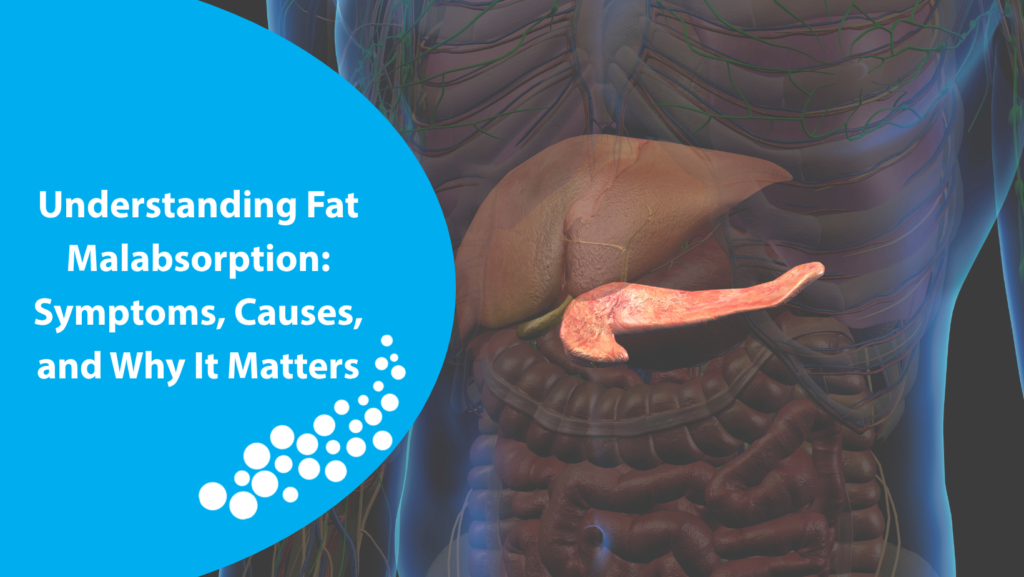
The pancreas helps support digestion by producing enzymes that assist in breaking down fats, proteins, and carbohydrates.
These enzymes help convert food into forms the body can absorb and use.
When digestion functions normally, fats are processed and nutrients can be absorbed efficiently.
What Happens When Fat Isn’t Absorbed Properly?
When fats are not broken down effectively, digestion can change.
Because fats are a major source of energy and help transport nutrients, challenges with digestion may sometimes affect overall nutritional status.
Symptoms may develop gradually and can vary from person to person.
Common Symptoms of Fat Malabsorption
Some commonly reported symptoms include:
- Oily or greasy stools
- Stools that may float or be difficult to flush
- Bloating or excess gas
- Digestive discomfort after meals
- Changes in weight
- Fatigue or low energy
- Difficulty tolerating high-fat meals
Not every person experiences symptoms in the same way.
Some people notice only mild changes, while others observe more significant digestive differences.
How Fat Malabsorption Relates to EPI
One condition commonly associated with fat malabsorption is Exocrine Pancreatic Insufficiency (EPI).
EPI occurs when the pancreas does not produce or deliver enough digestive enzymes to properly break down food.
Because pancreatic enzymes play a major role in fat digestion, reduced enzyme activity can affect how fats are processed.
The Connection to Chronic Pancreatitis
People living with Chronic Pancreatitis may experience changes in pancreatic function over time.
Research suggests that many individuals with Chronic Pancreatitis eventually develop EPI, which may contribute to digestive changes and nutrient absorption challenges.
As these changes happen gradually, symptoms may become easy to overlook.
Nutrients That Depend on Fat Absorption
Certain nutrients rely on fat absorption to be utilized effectively.
These include:
- Vitamin A
- Vitamin D
- Vitamin E
- Vitamin K
These are often referred to as fat-soluble vitamins.
Understanding the role of digestion in nutrient absorption can help provide important context around digestive health.
Paying Attention to Digestive Patterns
Symptoms don’t always appear suddenly.
Many people adapt to changes slowly and begin to view symptoms as part of everyday life.
Paying attention to patterns may help:
- Do symptoms happen after specific meals?
- Are high-fat foods more difficult to tolerate?
- Have symptoms changed over time?
Recognizing these patterns can support more informed conversations about digestive health.
Learning More About Digestive Health
Digestive symptoms can feel frustrating and difficult to explain.
Understanding concepts like fat digestion and nutrient absorption may help provide greater clarity around what the body is experiencing.
For some patients, educational and nutrition support resources may be available to help them better understand digestive health considerations.
Learn more about available support here.