
Key Takeaways
- The pancreas has both digestive (exocrine) and hormone-producing (endocrine) functions.
- Digestive enzymes help break down fats, proteins, and carbohydrates.
- Healthy pancreatic function supports nutrient absorption.
- Several digestive conditions can affect pancreatic function.
- Nutrition education can help individuals better understand digestive health.
Why the Pancreas Is So Important
Although many people are familiar with organs like the stomach and intestines, the pancreas often receives much less attention.
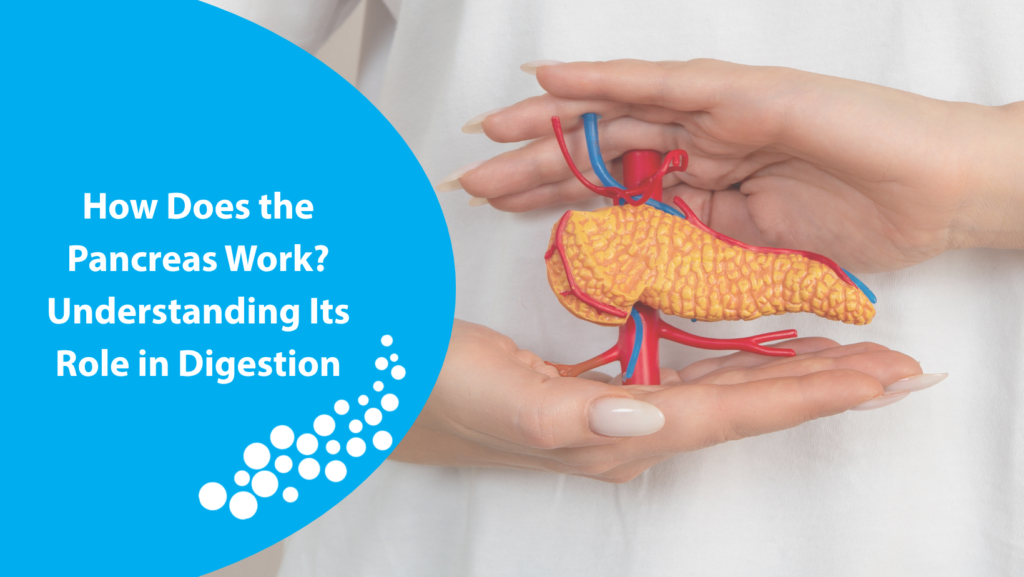
Despite its relatively small size, the pancreas plays an essential role in digestion by producing enzymes that help break down food into nutrients the body can absorb.
Understanding how the pancreas works can make it easier to understand digestive health and the conditions that may affect it.
Where Is the Pancreas Located?
The pancreas is a gland located behind the stomach and in front of the spine.
It works closely with the:
- Stomach
- Small intestine
- Liver
- Gallbladder
Together, these organs help digest food and absorb nutrients.
What Does the Pancreas Do?
The pancreas has two primary jobs:
Exocrine Function
Most of the pancreas is dedicated to producing digestive enzymes that are released into the small intestine.
These enzymes include:
- Lipase (helps digest fats)
- Proteases (help digest proteins)
- Amylase (helps digest carbohydrates)
Endocrine Function
The pancreas also produces hormones, including insulin and glucagon, which help regulate blood sugar levels.
Although both functions are important, they serve different purposes.
How Digestive Enzymes Support Digestion
When you eat, the pancreas releases digestive enzymes into the small intestine.
These enzymes help break food into smaller molecules so nutrients can be absorbed.
Without normal enzyme activity, digestion becomes less efficient.
Why Nutrient Absorption Matters
Digestion isn’t only about breaking food down.
The body also needs to absorb nutrients from that food.
Healthy digestion supports the absorption of:
- Vitamins
- Minerals
- Proteins
- Healthy fats
- Carbohydrates
Understanding nutrient absorption helps explain why pancreatic health is closely connected to overall nutrition.
Conditions That Can Affect the Pancreas
Several conditions may affect pancreatic function, including:
- Chronic pancreatitis
- Cystic fibrosis
- Pancreatic surgery
- Exocrine Pancreatic Insufficiency (EPI)
These conditions can influence digestion in different ways. If you have persistent digestive symptoms or concerns, it’s important to consult your healthcare provider for evaluation and personalized guidance.
Supporting Digestive Health
While everyone’s needs are different, many people benefit from learning more about:
- Digestion
- Balanced nutrition
- Symptom awareness
- Meal planning
- Conversations with healthcare professionals
Education is an important part of understanding digestive health.
Learn More About Digestive Health
If you’re interested in learning more about pancreatic health, digestion, and nutrition education, explore My EPI Plan to see what educational resources are available and whether you may be eligible.
Visit the My EPI Plan program page to learn more.