
Key Takeaways
- Digestive enzymes help break down food
- The pancreas plays an important role in enzyme production
- Enzymes help digest fats, proteins, and carbohydrates
- Digestion and nutrient absorption are closely connected
- Understanding digestive enzymes can help support digestive health awareness
Digestion Starts Before Nutrients Can Be Used
Every meal provides nutrients that help support the body’s daily functions.
However, before those nutrients can be absorbed and used, food must first be broken down into smaller components.
This is where digestive enzymes play an important role.
Digestive enzymes help the body process food so nutrients can be absorbed and utilized effectively.
What Are Digestive Enzymes?
Digestive enzymes are proteins that help break food into smaller molecules.
They support the digestion of:
- Fats
- Proteins
- Carbohydrates
Without digestive enzymes, the body would have difficulty processing many of the nutrients found in food.
Where Do Digestive Enzymes Come From?
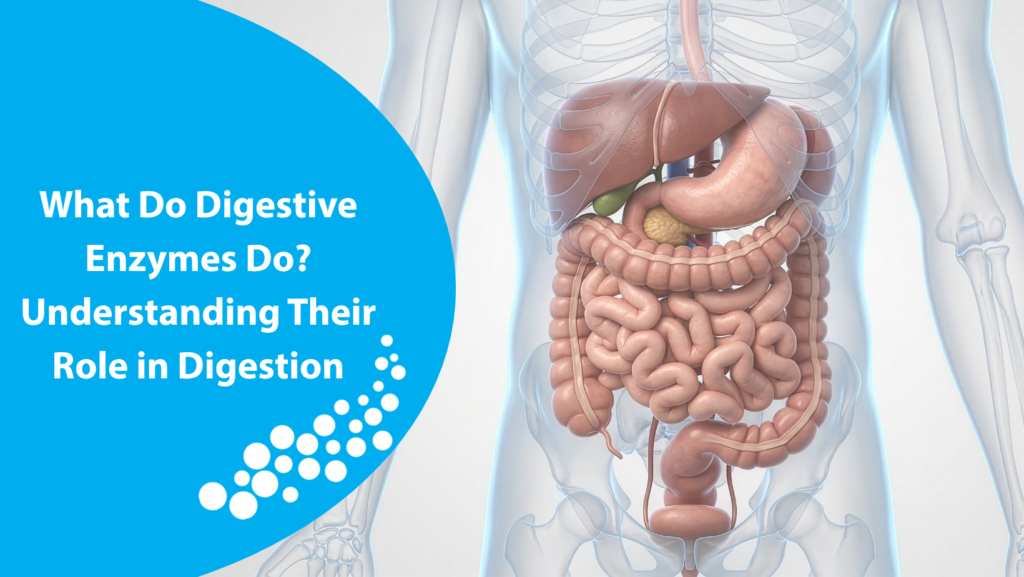
Several organs help produce digestive enzymes, but the pancreas plays a particularly important role.
The pancreas releases enzymes into the digestive tract to help break down food after eating.
These enzymes work alongside other digestive processes to support nutrient absorption.
The Three Main Types of Digestive Enzymes
Lipase
Lipase helps break down fats.
Because fats are more complex to digest, lipase plays an important role in helping the body absorb nutrients from fatty foods.
Protease
Protease helps break proteins into smaller building blocks called amino acids.
These building blocks are used throughout the body to support various functions.
Amylase
Amylase helps break down carbohydrates into simpler sugars that the body can use for energy.
Why Digestive Enzymes Matter
Digestive enzymes help support:
- Nutrient absorption
- Digestion of meals
- Energy production from food
- Utilization of vitamins and nutrients
When digestion works efficiently, nutrients can be processed and absorbed more effectively.
What Happens When Digestive Enzyme Activity Changes?
Digestive changes can occur for many reasons.
Some individuals may experience:
- Bloating
- Gas
- Digestive discomfort
- Changes in bowel habits
- Difficulty digesting certain foods
Because digestive symptoms can have many causes, understanding how digestion works can provide helpful context.
The Pancreas and Digestive Health
The pancreas plays a central role in producing digestive enzymes.
Conditions that affect pancreatic function may also influence digestion.
For example, individuals living with Chronic Pancreatitis may experience changes in pancreatic function over time.
Some people may also develop Exocrine Pancreatic Insufficiency (EPI), a condition that affects the pancreas’s ability to provide digestive enzymes needed for digestion.
Understanding Nutrient Absorption
Digestion and nutrient absorption work together.
Food must first be broken down before nutrients can be absorbed.
This is why digestive enzymes are an important part of overall digestive health.
Understanding this process can help individuals better understand the relationship between digestion, nutrition, and wellbeing.
Learning More About Digestive Health
Many people are surprised to learn how much digestion depends on enzyme activity.
Educational resources can help patients better understand:
- Digestive health
- Nutrient absorption
- Pancreatic function
- Symptom awareness
- Nutrition considerations
For eligible patients, additional digestive health and nutrition support resources may also be available.
Learn more about available support here.